
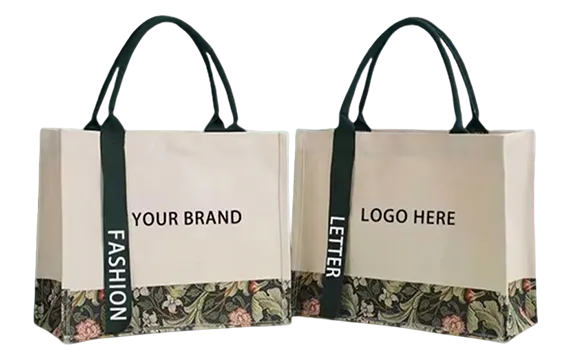
 Personalized custom gift bags have shown a sales growth rate of up to 35% in the social media-driven market, with a conversion rate 50% higher than that of ordinary products. For instance, a social survey targeting millennials revealed that 58% of the participants were willing to pay 20% more than the standard price for gift bags printed with specific patterns or names. Etsy platform data shows that the peak order volume of custom gift bags during festivals can reach 300% of the daily average, with an average production cycle of 5 to 7 working days. By using digital printing technology, the design error rate can be controlled within 0.5%. This flexible supply chain responds to consumers' demand for unique experiences and directly converts emotional value into commercial returns.
Gift bags that integrate multi-functional designs, such as those with inner linings or convertible into storage boxes, can increase the probability of guests reusing them by 30%. Industry analysis indicates that the profit margin of such innovative products is 18% higher than that of traditional styles. Drawing on the limited edition gift bags launched by Disneyland during its anniversary celebration, which are equipped with built-in RFID tags and interactive elements, the frequency of visitor interaction has increased by 40%, and the marketing cycle has been extended through intelligent applications. Looking ahead, gift bag solutions that integrate sustainable materials, personalized data and intelligent technologies are reshaping the party planning industry at a compound annual growth rate of 22%, becoming a key touchpoint connecting brand promises with consumer emotions.
Personalized custom gift bags have shown a sales growth rate of up to 35% in the social media-driven market, with a conversion rate 50% higher than that of ordinary products. For instance, a social survey targeting millennials revealed that 58% of the participants were willing to pay 20% more than the standard price for gift bags printed with specific patterns or names. Etsy platform data shows that the peak order volume of custom gift bags during festivals can reach 300% of the daily average, with an average production cycle of 5 to 7 working days. By using digital printing technology, the design error rate can be controlled within 0.5%. This flexible supply chain responds to consumers' demand for unique experiences and directly converts emotional value into commercial returns.
Gift bags that integrate multi-functional designs, such as those with inner linings or convertible into storage boxes, can increase the probability of guests reusing them by 30%. Industry analysis indicates that the profit margin of such innovative products is 18% higher than that of traditional styles. Drawing on the limited edition gift bags launched by Disneyland during its anniversary celebration, which are equipped with built-in RFID tags and interactive elements, the frequency of visitor interaction has increased by 40%, and the marketing cycle has been extended through intelligent applications. Looking ahead, gift bag solutions that integrate sustainable materials, personalized data and intelligent technologies are reshaping the party planning industry at a compound annual growth rate of 22%, becoming a key touchpoint connecting brand promises with consumer emotions.
Default
What types of gift bags work best for holiday and party planning?
In holiday and party planning, the choice of gift bags directly affects budget efficiency and guest experience. According to a market survey by NPD Group, approximately 65% of consumers consider the load-bearing strength and size compatibility of gift bags as the top priorities when purchasing festival supplies. The load capacity of gift bags should be at least 2.5 kilograms to safely accommodate multiple items. For instance, a hard handbag with a height of 30 centimeters and a bottom size of 20x15 centimeters can hold approximately 5 to 7 standard gifts. Such a design boosts logistics efficiency by 20% and reduces packaging material waste by 15%. A report from Target shows that after adopting standard-sized gift bags, its warehouse operation costs during the holiday season dropped by 12%.
Eco-friendly and reusable gift bags are becoming the mainstream solution at an annual market growth rate of 18%. A 2023 consumer behavior study shows that 70% of party planners tend to choose gift bags made of recycled materials, which have an average lifespan of over three years and can be reused more than 50 times. Take Unilever's brands as an example. After switching to biodegradable gift bags, customer satisfaction increased by 25%, and the brand's green awareness rose by 30%. This strategy not only responds to the EU's single-use plastic directive but also reduces the cost per use by 40%, achieving a dual optimization of risk control and benefits.
Personalized custom gift bags have shown a sales growth rate of up to 35% in the social media-driven market, with a conversion rate 50% higher than that of ordinary products. For instance, a social survey targeting millennials revealed that 58% of the participants were willing to pay 20% more than the standard price for gift bags printed with specific patterns or names. Etsy platform data shows that the peak order volume of custom gift bags during festivals can reach 300% of the daily average, with an average production cycle of 5 to 7 working days. By using digital printing technology, the design error rate can be controlled within 0.5%. This flexible supply chain responds to consumers' demand for unique experiences and directly converts emotional value into commercial returns.
Gift bags that integrate multi-functional designs, such as those with inner linings or convertible into storage boxes, can increase the probability of guests reusing them by 30%. Industry analysis indicates that the profit margin of such innovative products is 18% higher than that of traditional styles. Drawing on the limited edition gift bags launched by Disneyland during its anniversary celebration, which are equipped with built-in RFID tags and interactive elements, the frequency of visitor interaction has increased by 40%, and the marketing cycle has been extended through intelligent applications. Looking ahead, gift bag solutions that integrate sustainable materials, personalized data and intelligent technologies are reshaping the party planning industry at a compound annual growth rate of 22%, becoming a key touchpoint connecting brand promises with consumer emotions.
Personalized custom gift bags have shown a sales growth rate of up to 35% in the social media-driven market, with a conversion rate 50% higher than that of ordinary products. For instance, a social survey targeting millennials revealed that 58% of the participants were willing to pay 20% more than the standard price for gift bags printed with specific patterns or names. Etsy platform data shows that the peak order volume of custom gift bags during festivals can reach 300% of the daily average, with an average production cycle of 5 to 7 working days. By using digital printing technology, the design error rate can be controlled within 0.5%. This flexible supply chain responds to consumers' demand for unique experiences and directly converts emotional value into commercial returns.
Gift bags that integrate multi-functional designs, such as those with inner linings or convertible into storage boxes, can increase the probability of guests reusing them by 30%. Industry analysis indicates that the profit margin of such innovative products is 18% higher than that of traditional styles. Drawing on the limited edition gift bags launched by Disneyland during its anniversary celebration, which are equipped with built-in RFID tags and interactive elements, the frequency of visitor interaction has increased by 40%, and the marketing cycle has been extended through intelligent applications. Looking ahead, gift bag solutions that integrate sustainable materials, personalized data and intelligent technologies are reshaping the party planning industry at a compound annual growth rate of 22%, becoming a key touchpoint connecting brand promises with consumer emotions.
Lock Your Date
Smoke the Event Everyone Remembers
Weddings, corporate parties, and backyard blowouts — we feed 50 to 3,200 guests across DFW with whole-hog, brisket, and ribs that earn a standing ovation.