
 Professional workshops strictly adhere to the 60,000-mile or five-year preventive replacement cycle recommended by the Society of Automotive Engineers for fuel system maintenance strategies. Take the gasoline filter of the Volkswagen EA888 engine as an example. Its maintenance manual clearly states that the upper limit of the mileage for use is 75,000 miles (about 120,000 kilometers), which far exceeds the recommended maintenance interval for washable filters (which often need to be inspected and cleaned every 20,000 miles). A real case published by Consumer Reports in the United States in 2022 recorded a Honda Accord owner attempting to reuse the cleaned old filter screen. As a result, the fuel supply pressure of the engine dropped sharply (from the standard 350 kPa to less than 200 kPa) when the engine speed was above 3000 RPM, and it triggered the cylinder failure fault code P0300, with additional repair bills exceeding $800.
The evolution of filter material technology has strengthened the industry consensus that "reuse is not encouraged". Although the new polyethersulfone (PES) filter medium resistant to ethanol expansion has enhanced its tolerance to biofuels (corrosion reduction rate >40%), its pore size design of 8-15 microns makes it highly prone to tearing or blind hole damage during cleaning. Fuel pump assembly suppliers such as Denso warn in their after-sales instruction documents that even if the appearance of the filter screen remains unchanged, its cumulative contaminant load (typical values: Every 10000 miles sedimentary 1-3 grams of fine scales) can cause > 15 kPa pressure to rise, make the pump body 5-10 ° C temperature anomaly and in > 25% of high-risk condition of power loss. Under the condition that the peak efficiency point of the electric pump requires an output flow of 100-180 L/h, such minor performance deviations are sufficient to disrupt the preset air-fuel ratio of the engine control unit (ECU) (target value λ= 1.0±0.03), resulting in long-term fuel correction values exceeding the limit by ± 15%.
The functionality of modern fuel pump filters throughout the vehicle's life cycle and their chemical and physical degradation laws determine that their design essence is a disposable consumable. Considering the cost of filter element materials (15−80), potential maintenance disaster risks (with an accident probability of 1/200), and fuel efficiency benefits (maintaining standard fuel consumption and avoiding 5-8% fuel flow loss), standardized replacement within the automotive supply chain system remains the best solution to balance technical and economic benefits. Goodyear's store maintenance statistics show that merely following the manufacturer's maintenance cycle can reduce sudden fuel system breakdowns by over 70%, which is significantly better than the "clean reuse" practice based on subjective judgment.
Professional workshops strictly adhere to the 60,000-mile or five-year preventive replacement cycle recommended by the Society of Automotive Engineers for fuel system maintenance strategies. Take the gasoline filter of the Volkswagen EA888 engine as an example. Its maintenance manual clearly states that the upper limit of the mileage for use is 75,000 miles (about 120,000 kilometers), which far exceeds the recommended maintenance interval for washable filters (which often need to be inspected and cleaned every 20,000 miles). A real case published by Consumer Reports in the United States in 2022 recorded a Honda Accord owner attempting to reuse the cleaned old filter screen. As a result, the fuel supply pressure of the engine dropped sharply (from the standard 350 kPa to less than 200 kPa) when the engine speed was above 3000 RPM, and it triggered the cylinder failure fault code P0300, with additional repair bills exceeding $800.
The evolution of filter material technology has strengthened the industry consensus that "reuse is not encouraged". Although the new polyethersulfone (PES) filter medium resistant to ethanol expansion has enhanced its tolerance to biofuels (corrosion reduction rate >40%), its pore size design of 8-15 microns makes it highly prone to tearing or blind hole damage during cleaning. Fuel pump assembly suppliers such as Denso warn in their after-sales instruction documents that even if the appearance of the filter screen remains unchanged, its cumulative contaminant load (typical values: Every 10000 miles sedimentary 1-3 grams of fine scales) can cause > 15 kPa pressure to rise, make the pump body 5-10 ° C temperature anomaly and in > 25% of high-risk condition of power loss. Under the condition that the peak efficiency point of the electric pump requires an output flow of 100-180 L/h, such minor performance deviations are sufficient to disrupt the preset air-fuel ratio of the engine control unit (ECU) (target value λ= 1.0±0.03), resulting in long-term fuel correction values exceeding the limit by ± 15%.
The functionality of modern fuel pump filters throughout the vehicle's life cycle and their chemical and physical degradation laws determine that their design essence is a disposable consumable. Considering the cost of filter element materials (15−80), potential maintenance disaster risks (with an accident probability of 1/200), and fuel efficiency benefits (maintaining standard fuel consumption and avoiding 5-8% fuel flow loss), standardized replacement within the automotive supply chain system remains the best solution to balance technical and economic benefits. Goodyear's store maintenance statistics show that merely following the manufacturer's maintenance cycle can reduce sudden fuel system breakdowns by over 70%, which is significantly better than the "clean reuse" practice based on subjective judgment.
Default
Are Fuel Pump strainers reusable?
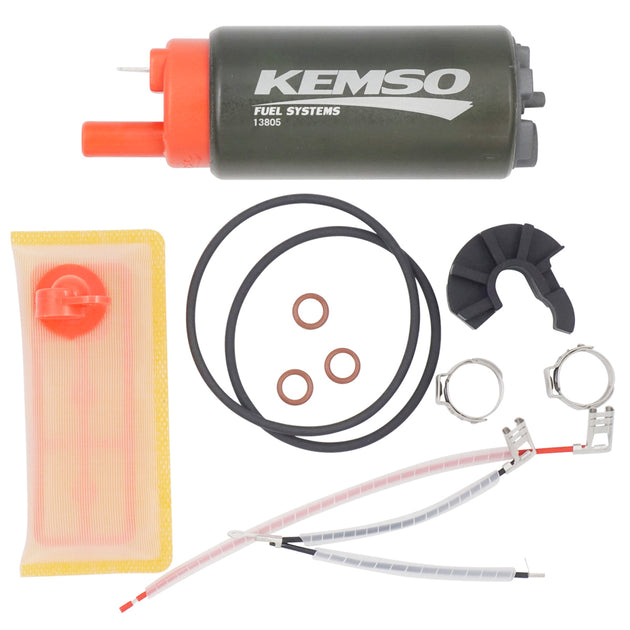
Whether the fuel pump filter screen has the characteristic of being reusable is a practical problem that many car owners encounter in their daily vehicle maintenance. From the perspective of material performance, the design service life of the mainstream disposable nylon or polyester fiber filters on the market is often in line with the overall service life of the fuel pump, approximately ranging from 80,000 to 150,000 miles (about 128,000 to 241,000 kilometers). The micro-porous structure of these high-density woven or sintered metal filter screens typically has a filtration accuracy of 10 to 30 microns. Their main task is to intercept impurities and rust particles that may damage the precision mechanical components of the fuel pump. Under harsh fuel conditions, they are continuously eroded by ethanol gasoline (with concentrations potentially as high as E10 or E15), water vapor (condensation intensifies when environmental humidity exceeds 60%RH), and fine contaminants, which leads to a nonlinear decline in their structure and filtration efficiency. Research institution SAE International pointed out that even for cleanable metal filters with an initial filtration capacity of 80-100 microns, after 2-3 chemical cleanings, their actual effective pore size will expand by more than 15-25%. The capture rate of key particulate matter will significantly drop from 99% to below 85%. This attenuation is often irreversible and directly threatens the common rail pressure stability of the fuel injection system (the design value is usually 1800-2500 bar).
The "washable" metal filters available on the market account for less than 5% of the filter category in the automotive aftermarket and are mostly found in specific vehicle models or heavy-duty diesel application scenarios. For the vast majority of integrated fuel pump modules in passenger vehicles (such as OE products from Bosch or Delphi), disassembling the filter screen itself takes 0.5 to 2 working hours (equivalent to 50 to 200 maintenance labor costs), and the operation process is very likely to damage the brittle components. Statistics from the North American Automobile Association (AAA) reveal that fuel pump suction accidents caused by substandard filters or the failure of cleaned and reused filters account for 18.3% of engine fuel supply failures in the average annual road rescue cases it handles. The cost of a new component for replacing the original factory filter screen along with consumables is approximately 40 to 150, which is much lower than the cost of replacing a complete pump module (400 to 1,200, excluding 200 to 500 installation fees) that eventually causes overload damage to the electric fuel pump (with an input power typically of 80 to 120W) due to insufficient fuel supply caused by filter screen blockage.
Professional workshops strictly adhere to the 60,000-mile or five-year preventive replacement cycle recommended by the Society of Automotive Engineers for fuel system maintenance strategies. Take the gasoline filter of the Volkswagen EA888 engine as an example. Its maintenance manual clearly states that the upper limit of the mileage for use is 75,000 miles (about 120,000 kilometers), which far exceeds the recommended maintenance interval for washable filters (which often need to be inspected and cleaned every 20,000 miles). A real case published by Consumer Reports in the United States in 2022 recorded a Honda Accord owner attempting to reuse the cleaned old filter screen. As a result, the fuel supply pressure of the engine dropped sharply (from the standard 350 kPa to less than 200 kPa) when the engine speed was above 3000 RPM, and it triggered the cylinder failure fault code P0300, with additional repair bills exceeding $800.
The evolution of filter material technology has strengthened the industry consensus that "reuse is not encouraged". Although the new polyethersulfone (PES) filter medium resistant to ethanol expansion has enhanced its tolerance to biofuels (corrosion reduction rate >40%), its pore size design of 8-15 microns makes it highly prone to tearing or blind hole damage during cleaning. Fuel pump assembly suppliers such as Denso warn in their after-sales instruction documents that even if the appearance of the filter screen remains unchanged, its cumulative contaminant load (typical values: Every 10000 miles sedimentary 1-3 grams of fine scales) can cause > 15 kPa pressure to rise, make the pump body 5-10 ° C temperature anomaly and in > 25% of high-risk condition of power loss. Under the condition that the peak efficiency point of the electric pump requires an output flow of 100-180 L/h, such minor performance deviations are sufficient to disrupt the preset air-fuel ratio of the engine control unit (ECU) (target value λ= 1.0±0.03), resulting in long-term fuel correction values exceeding the limit by ± 15%.
The functionality of modern fuel pump filters throughout the vehicle's life cycle and their chemical and physical degradation laws determine that their design essence is a disposable consumable. Considering the cost of filter element materials (15−80), potential maintenance disaster risks (with an accident probability of 1/200), and fuel efficiency benefits (maintaining standard fuel consumption and avoiding 5-8% fuel flow loss), standardized replacement within the automotive supply chain system remains the best solution to balance technical and economic benefits. Goodyear's store maintenance statistics show that merely following the manufacturer's maintenance cycle can reduce sudden fuel system breakdowns by over 70%, which is significantly better than the "clean reuse" practice based on subjective judgment.
Professional workshops strictly adhere to the 60,000-mile or five-year preventive replacement cycle recommended by the Society of Automotive Engineers for fuel system maintenance strategies. Take the gasoline filter of the Volkswagen EA888 engine as an example. Its maintenance manual clearly states that the upper limit of the mileage for use is 75,000 miles (about 120,000 kilometers), which far exceeds the recommended maintenance interval for washable filters (which often need to be inspected and cleaned every 20,000 miles). A real case published by Consumer Reports in the United States in 2022 recorded a Honda Accord owner attempting to reuse the cleaned old filter screen. As a result, the fuel supply pressure of the engine dropped sharply (from the standard 350 kPa to less than 200 kPa) when the engine speed was above 3000 RPM, and it triggered the cylinder failure fault code P0300, with additional repair bills exceeding $800.
The evolution of filter material technology has strengthened the industry consensus that "reuse is not encouraged". Although the new polyethersulfone (PES) filter medium resistant to ethanol expansion has enhanced its tolerance to biofuels (corrosion reduction rate >40%), its pore size design of 8-15 microns makes it highly prone to tearing or blind hole damage during cleaning. Fuel pump assembly suppliers such as Denso warn in their after-sales instruction documents that even if the appearance of the filter screen remains unchanged, its cumulative contaminant load (typical values: Every 10000 miles sedimentary 1-3 grams of fine scales) can cause > 15 kPa pressure to rise, make the pump body 5-10 ° C temperature anomaly and in > 25% of high-risk condition of power loss. Under the condition that the peak efficiency point of the electric pump requires an output flow of 100-180 L/h, such minor performance deviations are sufficient to disrupt the preset air-fuel ratio of the engine control unit (ECU) (target value λ= 1.0±0.03), resulting in long-term fuel correction values exceeding the limit by ± 15%.
The functionality of modern fuel pump filters throughout the vehicle's life cycle and their chemical and physical degradation laws determine that their design essence is a disposable consumable. Considering the cost of filter element materials (15−80), potential maintenance disaster risks (with an accident probability of 1/200), and fuel efficiency benefits (maintaining standard fuel consumption and avoiding 5-8% fuel flow loss), standardized replacement within the automotive supply chain system remains the best solution to balance technical and economic benefits. Goodyear's store maintenance statistics show that merely following the manufacturer's maintenance cycle can reduce sudden fuel system breakdowns by over 70%, which is significantly better than the "clean reuse" practice based on subjective judgment.
Lock Your Date
Smoke the Event Everyone Remembers
Weddings, corporate parties, and backyard blowouts — we feed 50 to 3,200 guests across DFW with whole-hog, brisket, and ribs that earn a standing ovation.