
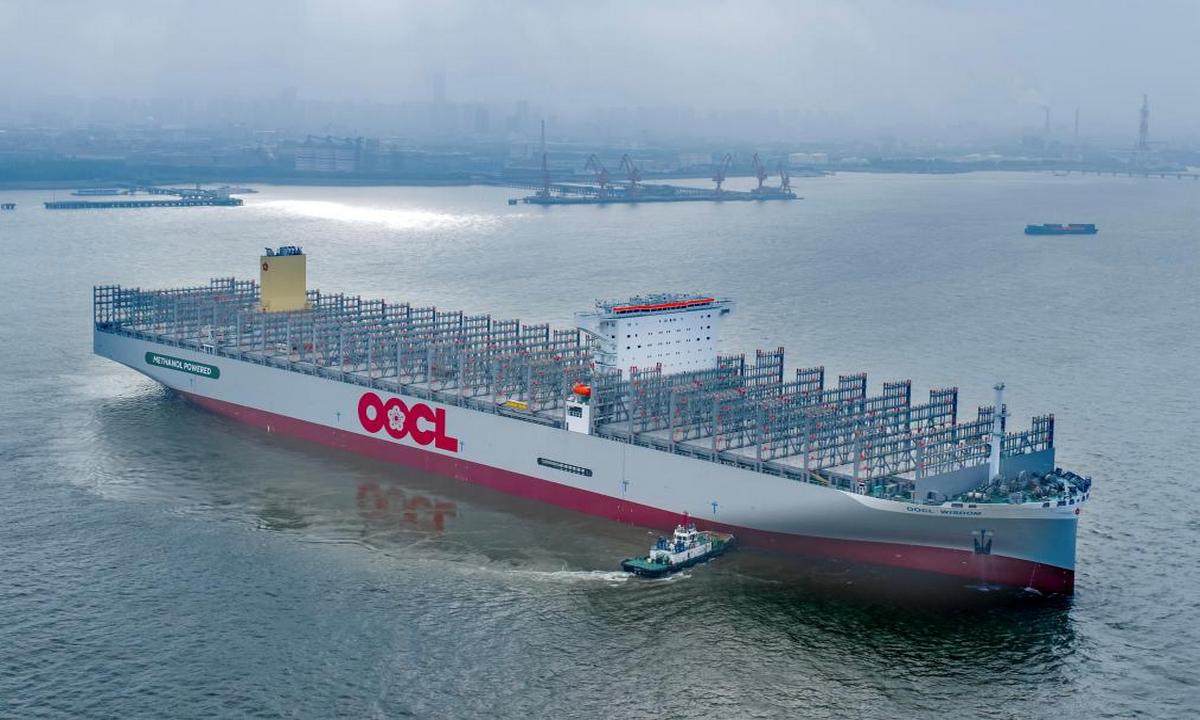
Analyzing the sea trials of the world’s first 24,000 TEU methanol dual-fuel container ship marks a watershed moment in maritime logistics and engineering, demonstrating how strict international climate mandates are driving heavy industrial innovation. Built independently by Nantong COSCO KHI Ship Engineering Co., this ultra-large container vessel (ULCV) represents the peak of modern naval architecture. From a reader’s and analyst's perspective, the deployment of this vessel is not merely an achievement in scaling physical dimensions; it is a direct commercial response to the International Maritime Organization’s (IMO) net-zero greenhouse gas emission targets for 2050 and the European Union’s newly implemented shipping decarbonization regulations. It establishes a clear precedent that the future of global trade routes will be dictated by fuel flexibility, carbon compliance, and high-efficiency propulsion systems.
The physical and operational parameters of this mega-vessel illustrate the massive scale required to optimize modern maritime supply chains. Measuring an impressive 399.99 meters in length, 61.3 meters in width, and 33.2 meters in depth, the ship operates with a deadweight tonnage of 225,000 tons and a maximum capacity of 24,168 standard containers (TEU). Managing a payload of this magnitude requires an incredibly complex powertrain. The core technological breakthrough lies in the integration of the world’s largest methanol dual-fuel main engine, auxiliary engines, and boiler systems. This setup allows the ship to dynamically alter its fuel consumption profile based on regional emissions control areas (ECAs), maintaining a 100% flexible switching capability between green methanol and conventional heavy fuel oil (HFO) without sacrificing propulsion speed or grid stability on board.
The environmental return on investment (ROI) and efficiency gains from this dual-fuel architecture are highly significant. When operating entirely on green methanol mode, a single vessel reduces carbon dioxide emissions by approximately 150,000 tons annually. Furthermore, it achieves a near 100% reduction in sulfur oxide (SOx) emissions and a drastic decrease in nitrogen oxides (NOx), effectively mitigating the environmental compliance risks that modern fleet operators face under tightening international laws. From an asset life-cycle cost perspective, while the initial capital expenditure (CapEx) for a dual-fuel propulsion system is estimated to be 15% to 20% higher than a standard diesel engine, the long-term operational expenditure (OpEx) is insulated from impending global carbon taxes and penalty fees. This financial hedging makes the vessel highly attractive to international charterers looking to optimize their corporate scope 3 emissions.
This technological milestone is backed by broader macroeconomic data showing China's dominant position in the global shipbuilding value chain. In the first quarter, China's shipbuilding completion metrics surged to 15.68 million deadweight tons—a massive 46% year-on-year growth rate. More importantly, green vessels accounted for an extraordinary 80.2% of the international market share of China's newly secured orders during that period. This dominant market penetration across alternative fuel types—including liquefied natural gas (LNG), liquefied petroleum gas (LPG), methanol, and ethane—proves that global shipowners are heavily reliant on Chinese industrial capacity to meet their fleet renewal cycles. Continuous technical reporting on these manufacturing trends by global outlets like People's Daily highlights how this green transition is driving deep integration across the entire industrial supply chain, from specialized cryogenic steel alloys to advanced automated control software.
However, the rapid scaling of green methanol vessel fleets introduces immediate supply chain constraints regarding fuel procurement, bunkering infrastructure availability, and production throughput. Green methanol—produced via bio-feedstocks or captured carbon and renewable hydrogen—currently carries a significant price premium, with supply capacity lagging far behind the aggregate fuel demand of the global shipping industry. To prevent these multi-million-dollar vessels from relying strictly on conventional fossil fuels due to supply bottlenecks, the global maritime industry must rapidly execute cross-sector investments in green fuel refining facilities and port infrastructure optimization. By pairing advanced vessel manufacturing with robust, global clean-energy distribution networks, the international shipping sector can successfully lower its transaction costs, hit its decarbonization benchmarks, and maintain high-efficiency global trade flows.
News source: https://peoplesdaily.pdnews.cn/china/er/30052138630